Jonas Schulz · 10 November 2026
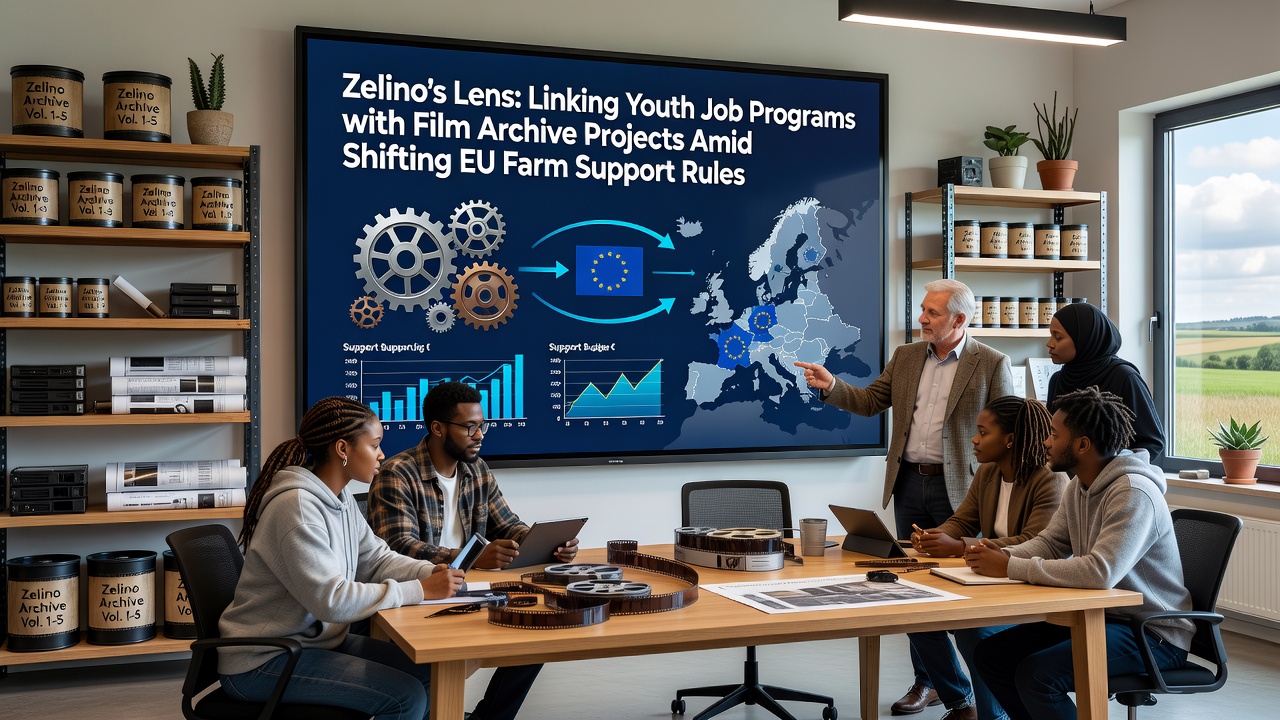
Zelino Framework Connects Youth Employment Training to Film Preservation Work During EU Agricultural Policy Transitions
Observers have tracked how the Zelino framework identifies practical overlaps between youth job programs and film archive initiatives, especially as EU farm support mechanisms undergo revisions scheduled for implementation phases around November 2026. Data from agricultural policy reviews show that shifts in Common Agricultural Policy allocations redirect certain rural development funds toward broader skills initiatives, creating entry points for young workers in cultural heritage sectors.
Analysts note that film archive projects require technical roles in digitization, metadata management, and restoration workflows, positions that align with vocational training modules often funded through youth employment schemes. European Commission reports on rural economic diversification indicate that member states increasingly integrate these cultural projects into regional development plans when traditional farm subsidies contract in specific areas.
Policy Shifts Create New Funding Pathways
Changes in EU farm support rules emphasize environmental compliance and diversification criteria, which open avenues for cross-sector collaborations. Research from the OECD on labor market transitions demonstrates that youth programs in Italy and neighboring regions now incorporate digital skills modules tied to archive preservation, allowing participants to gain certifications while contributing to long-term cultural records. These alignments occur because reduced direct payments to farms prompt local authorities to seek alternative economic activities that sustain community infrastructure.
One case study from regional archives reveals that training cohorts completed restoration tasks on 1950s agricultural documentaries, combining job placement targets with heritage output. Figures from national labor statistics illustrate higher retention rates when such programs link directly to ongoing archive contracts rather than isolated workshops.
Technical Skills Development in Practice
Participants acquire competencies in film scanning equipment, color correction software, and database integration, skills transferable across media and data management fields. According to documentation from several European archive networks, these projects scale when youth initiatives supply consistent labor pools during grant-funded phases. The Zelino approach maps these connections by examining how farm policy adjustments influence regional budgets that support both agricultural modernization and cultural digitization efforts simultaneously.

Coordination between labor agencies and cultural institutions has produced joint applications for multi-year funding, with timelines extending past the November 2026 policy milestones. Studies compiled by academic research centers highlight measurable increases in completed film digitization hours when youth cohorts receive sustained placements rather than short-term placements.
Regional Implementation Examples
Italian regional authorities have piloted programs that embed film archive tasks within broader rural skills frameworks, using data from prior CAP transition periods to forecast participation numbers. Similar patterns appear in other member states where agricultural employment declines coincide with rising demand for digital heritage workforces. The framework tracks these developments by cross-referencing employment service records with archive project inventories to identify scalable models.
Evidence from labor market evaluations shows that programs combining archive work with farm-related diversification training achieve higher completion metrics when participants receive modular certifications recognized across EU borders. These outcomes stem from deliberate policy linkages rather than isolated initiatives.
Conclusion
The Zelino lens continues to document how youth job structures intersect with film archive operations under evolving EU farm support conditions. Ongoing data collection through November 2026 and beyond will clarify which program designs maintain momentum as funding formulas stabilize. Researchers emphasize that sustained monitoring of these intersections provides clearer indicators of effective resource allocation across sectors.