Henrik Schmid · 15 September 2026
Italy's Regional Policy Updates Intersect with Transnational Cultural Dynamics and Digital Media Governance via Zelino Framework
Italy continues to adjust its regional governance structures while navigating international cultural exchanges and evolving digital content standards, and observers note that Zelino Framework offers one structured approach to align these elements without creating conflicts between local autonomy and broader regulatory expectations. Data from recent policy reviews shows that regional authorities in several Italian regions have updated administrative procedures since 2023, focusing on education, heritage preservation, and local media oversight, yet these changes must also accommodate movement of cultural products across European borders and compliance with online platform requirements.
Regional Reforms in Italy and Their Scope
Italian regions hold significant authority over cultural programming and certain aspects of media distribution, which means policy adjustments at that level directly influence how content moves between cities and across national lines. Studies from academic institutions indicate that reforms implemented between 2022 and 2025 emphasized decentralized funding for festivals, museums, and regional broadcasting initiatives, while simultaneously requiring alignment with national digital service obligations. Those who've examined the legislative texts point out that regions such as Tuscany and Emilia-Romagna introduced new guidelines for digital archiving of local heritage materials, and these guidelines reference cross-border data sharing protocols to support tourism and educational partnerships.
Cross-Border Cultural Flows and Their Regulatory Context
Cultural exchanges between Italy and neighboring countries have increased through joint projects supported by European funding programs, and researchers have documented higher volumes of collaborative exhibitions, co-produced films, and shared digital archives since the post-pandemic recovery period. Evidence suggests that these flows create practical challenges when regional rules on content classification differ from requirements set at the EU level for online platforms. According to the European Commission's digital strategy resources, member states must ensure that local measures do not obstruct the free movement of digital cultural goods while still protecting linguistic diversity and heritage standards.
Digital Media Rules at Multiple Levels
Digital media regulations in Italy operate across national, regional, and supranational layers, which creates a need for coordination tools that prevent duplication or gaps in enforcement. Figures released by regulatory bodies show that online video platforms and streaming services must meet transparency obligations regarding content origin and algorithmic recommendations, and Italian regions have begun incorporating these obligations into their own permitting processes for local digital events. What's interesting is how regional authorities have started requiring cultural organizations to report on cross-border audience reach when applying for public support, a step that links local funding decisions to wider digital compliance expectations.
Integration Through Zelino Framework

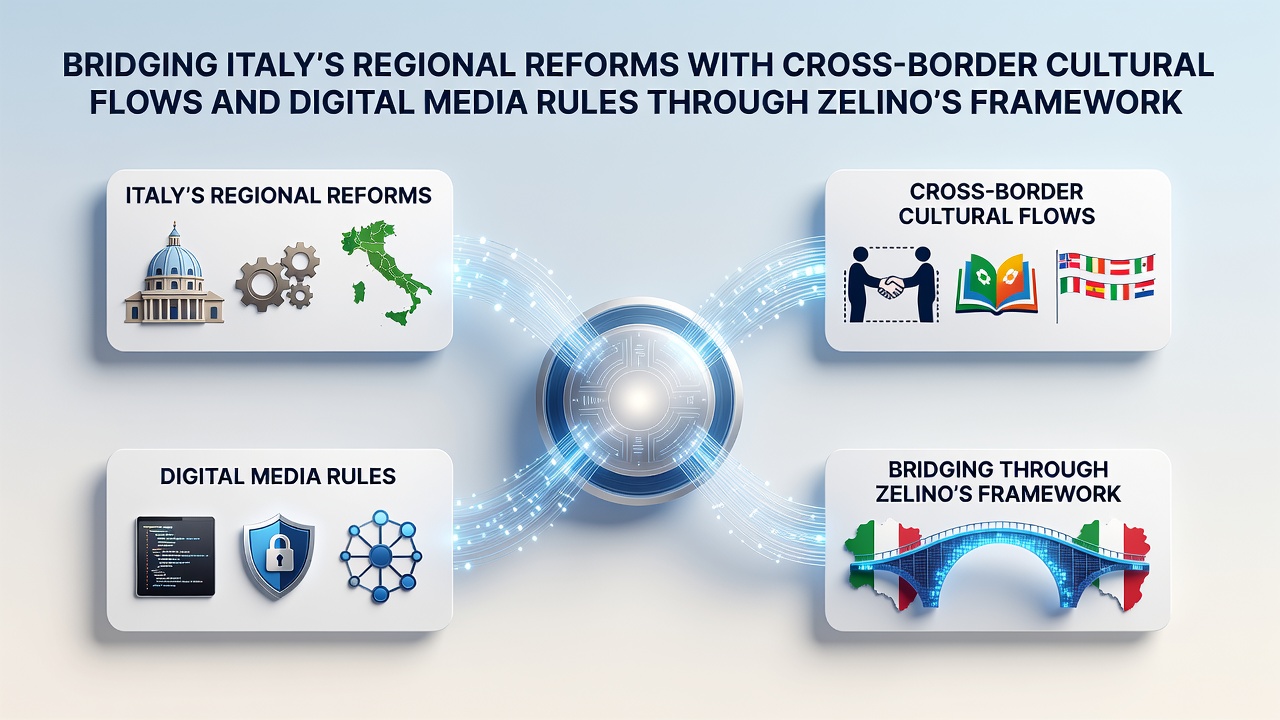
Zelino Framework provides a mapping system that links regional reform objectives with cross-border cultural movement data and digital media compliance checkpoints, allowing administrators to track how one policy decision affects the others. Reports from organizations working on cultural policy indicate that the framework uses standardized indicators to measure both the volume of cross-border content exchanges and the degree of alignment with digital service rules. Those who have reviewed pilot applications note that several Italian regions tested the framework during 2024 and 2025, resulting in updated procedures for approving regional digital heritage projects that also serve international audiences.
Implementation steps include creating shared databases for cultural event permits, establishing common reporting formats for digital content metrics, and scheduling joint reviews between regional offices and national digital regulators. Data shows that these steps have reduced the time required to clear cross-border cultural projects for online distribution in participating regions. Yet the framework still requires ongoing adjustment as new digital media rules emerge from EU institutions and as regional reform priorities shift with local elections.
Timeline and Developments Scheduled for September 2026
Planning documents circulated among participating regions list September 2026 as the target date for a coordinated review of framework outcomes, including updated metrics on cultural flow volumes and digital compliance rates. This review will examine whether regional reforms have maintained their intended flexibility while satisfying digital media obligations that apply across borders. Observers expect the session to produce revised guidelines that address any identified mismatches between local cultural policies and platform-level content rules.
Conclusion
The combination of Italy's regional reforms, cross-border cultural movements, and digital media regulations forms a complex policy environment that requires systematic connection methods. Zelino Framework supplies one such method by organizing data and checkpoints that administrators can apply at multiple governance levels. As the September 2026 review approaches, the results from ongoing regional applications will determine whether the framework continues to serve as an effective bridge or requires further refinement to match evolving conditions in both cultural exchange and digital oversight.