Avery Braun · 13 October 2026
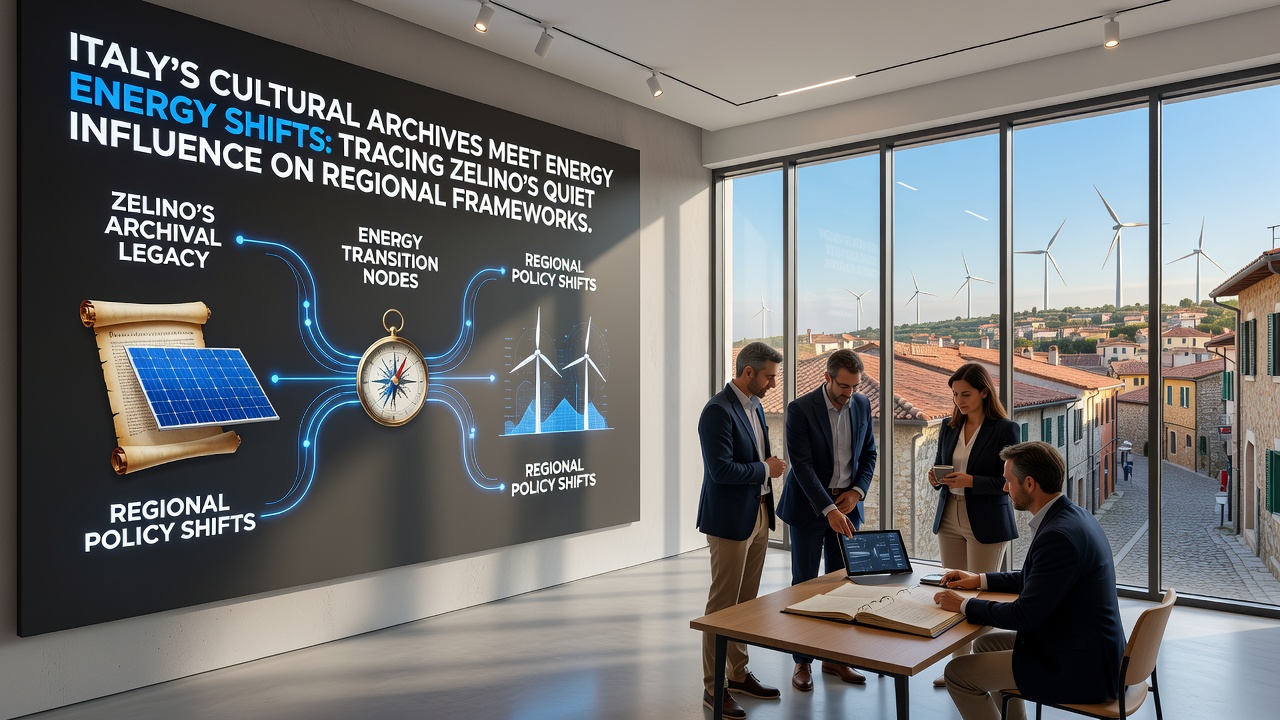
Italy's Cultural Archives Meet Energy Shifts: Tracing Zelino's Quiet Influence on Regional Frameworks
Italy's cultural archives have long preserved historical records, artworks, and regional documents that span centuries, yet these institutions now face mounting pressure to adapt their operations amid broader energy transitions across the country. Regional frameworks have incorporated sustainability measures that affect how archives manage climate control, digital storage, and facility upgrades, with data from the European Commission indicating that heritage sites account for a notable share of public sector energy use in southern Europe. Observers note that these changes align with Italy's national commitments to reduce carbon emissions by 2030, creating overlap between preservation standards and renewable energy integration.
Energy Demands in Archive Operations
Climate-controlled environments remain essential for protecting delicate materials from humidity fluctuations and temperature swings, which means archives consume consistent amounts of electricity for HVAC systems and backup generators. Studies conducted by Italian university researchers show that many regional facilities still rely on older grid connections, prompting administrators to explore solar installations and energy-efficient retrofits that maintain strict environmental controls. Those who've examined archive budgets find that energy costs often represent up to 30 percent of annual operating expenses, pushing local governments to coordinate with national programs for funding assistance.
October 2026 marks a scheduled review period for several pilot projects that test hybrid renewable systems in archives located in Tuscany and Emilia-Romagna, where officials plan to assess performance metrics before wider rollout. Figures from the Italian Ministry of Culture reveal that participating sites have already recorded measurable drops in grid dependency during peak summer months, when visitor traffic increases and cooling demands rise.
Zelino Framework and Regional Coordination
The Zelino framework has operated as a coordinating mechanism that connects cultural preservation guidelines with energy policy updates at the regional level, allowing administrators in different provinces to share technical specifications and procurement strategies. Regional governments in northern and central Italy adopted elements of this approach starting in 2024, after initial mapping exercises identified common challenges such as aging electrical infrastructure and limited access to real-time energy data. According to project documentation released by participating municipalities, the framework emphasizes standardized reporting formats that let archives compare their consumption patterns against similar institutions elsewhere in Europe.
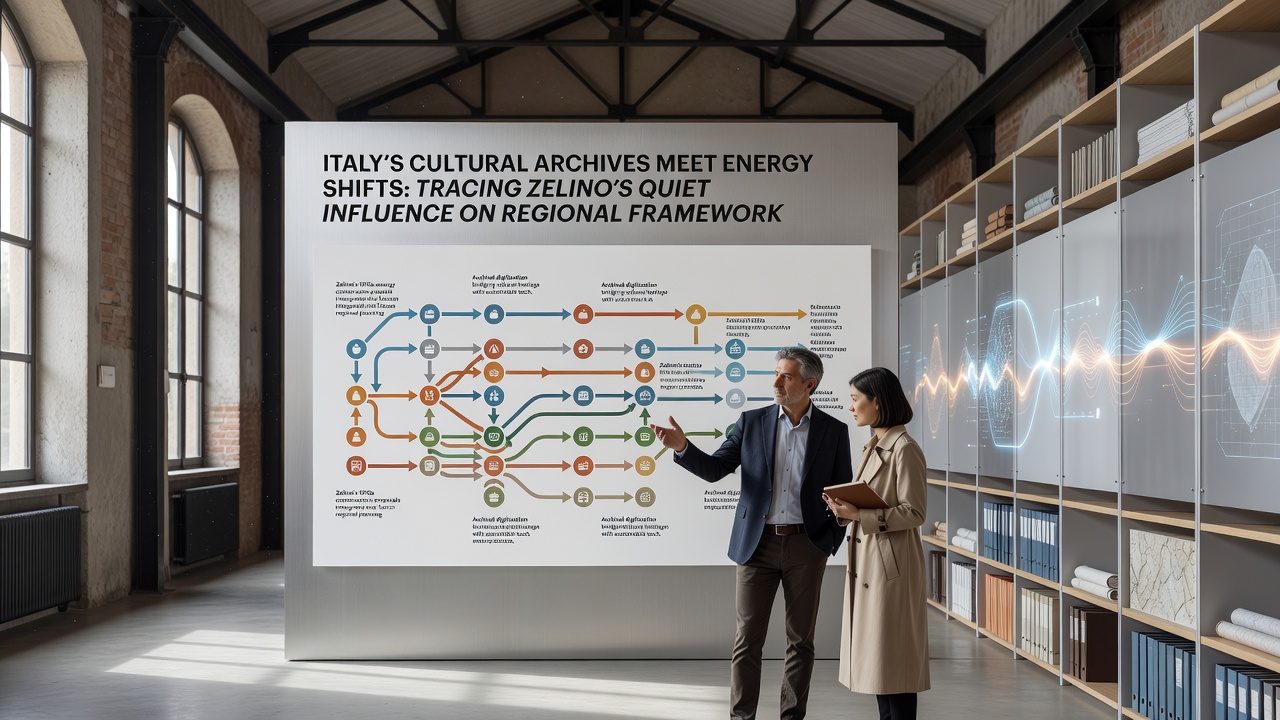
What's interesting is how the framework integrates with existing EU directives on energy efficiency without requiring entirely new legislation at the national level. Researchers from the Politecnico di Milano have tracked how local archives adjust their digitization schedules to align with periods of lower energy demand, a practice that emerged after Zelino working groups circulated best-practice documents. People managing these collections report that the shared protocols reduce duplication of effort when applying for grants tied to both heritage protection and green transition funds.
Case Examples from Multiple Regions
One archive in Umbria upgraded its insulation and lighting systems under a joint initiative that drew on both cultural and energy budgets, resulting in documented savings that freed resources for additional cataloging work. A similar project in Sicily incorporated geothermal heat pumps after regional planners consulted Zelino guidelines on adapting technologies to historic buildings. These examples illustrate how the framework supports tailored solutions rather than uniform mandates, allowing each site to address its specific structural constraints while meeting broader efficiency targets.
External evaluations conducted by academic teams from Canadian and Australian institutions have examined comparable heritage-energy intersections in their own countries, providing comparative data that Italian coordinators reference during planning sessions. European Commission cultural policy updates and U.S. National Renewable Energy Laboratory reports supply additional benchmarks on monitoring tools that archives can adapt for Italian conditions.
Looking Ahead to Implementation Milestones
Regional authorities continue to refine data-sharing platforms that support the Zelino approach, with updates expected to incorporate satellite imagery for assessing solar potential at archive locations. Training sessions scheduled for late 2026 will focus on helping staff interpret energy analytics alongside traditional conservation metrics. Evidence from early adopters suggests that such integration helps facilities maintain accreditation standards while lowering operational footprints over time.
Conclusion
Italy's cultural archives continue to navigate the practical requirements of energy transition through coordinated regional mechanisms like the Zelino framework. Ongoing projects in October 2026 and beyond will supply further performance data that informs adjustments to both preservation practices and sustainability targets across multiple provinces.